
Curriculum
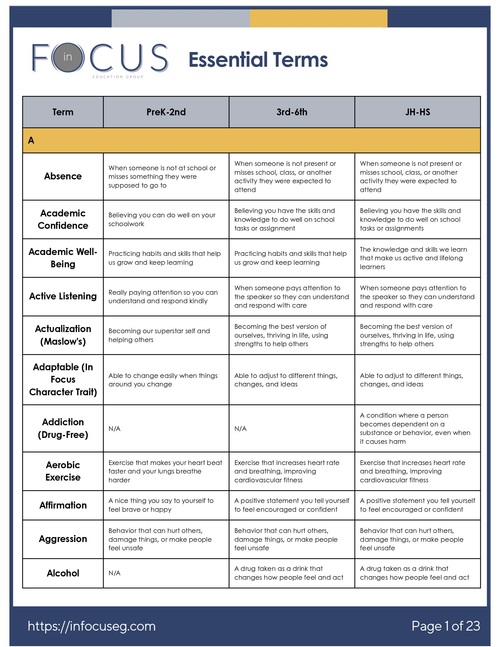
As part of each In Focus lesson, we define essential terms that students will need to know in order to fully engage with the content of the lesson. This resource is a comprehensive list of all essential terms included throughout our lessons.
Why include vocabulary in well-being lessons?
Research shows that sufficient background knowledge is a key component of students’ comprehension of a subject (Marzano). By explicitly defining and scaffolding essential terms students may not already be familiar with, we invite them to make connections to what they already know, thereby assisting in building the background knowledge that will help them succeed.
According to research summarized by the National Center on Improving Literacy, explicit vocabulary instruction:
- Helps students learn difficult words
- Leads to better reading and listening comprehension
- Helps deepen knowledge of word meanings
- Helps students use words accurately in speaking and writing
Additionally, our character trait lessons introduce and define character traits that are found in most ELA textbooks.
How is the Glossary of Essential Terms organized?
Every essential term used throughout our In Focus lessons is listed alphabetically. Additionally, each term is defined using student-friendly language specific to 3 different levels (early elementary, upper elementary, and secondary).
How do the essential terms show up in each lesson?
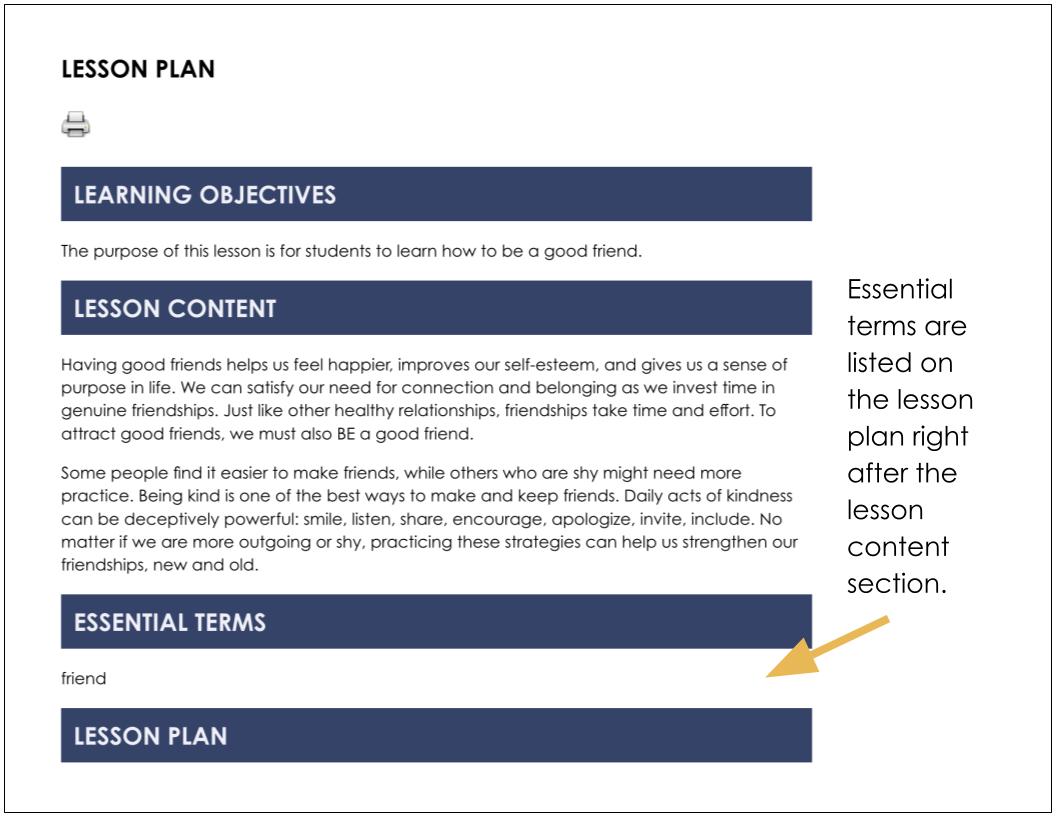
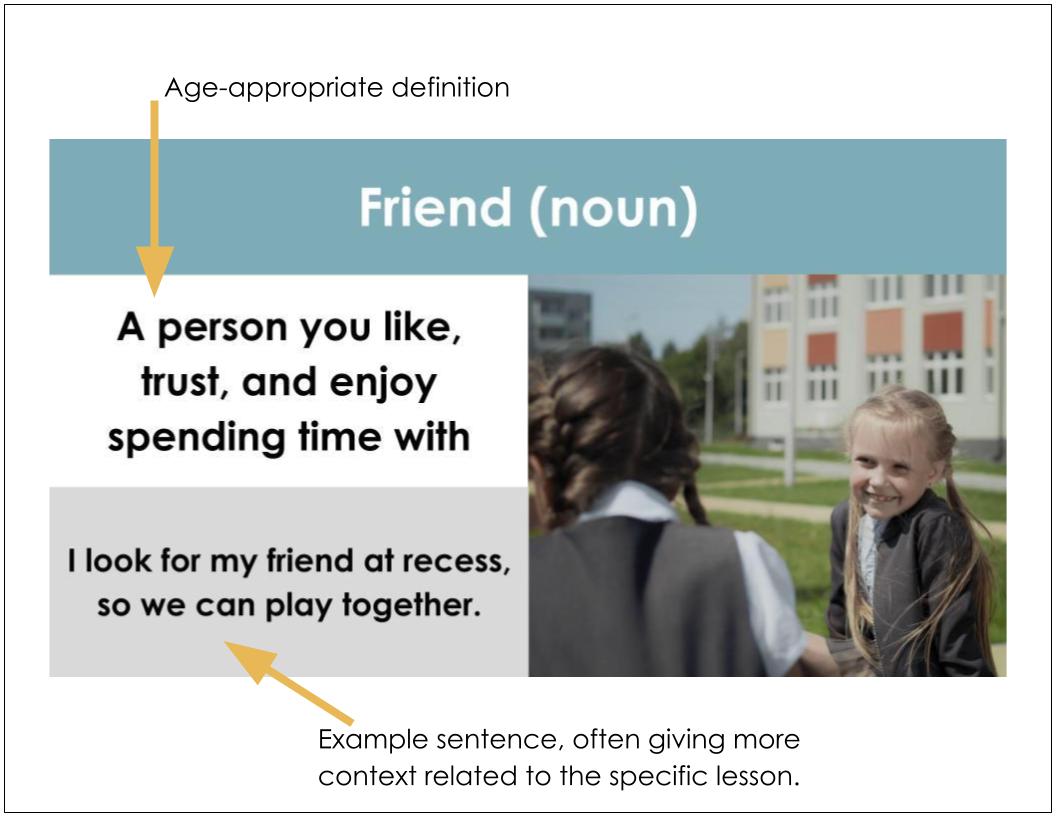
You will find the essential terms included in a lesson listed at the beginning of each lesson plan. Any terms listed there will be included on our slide decks along with a definition, example sentence, and corresponding image.
Does every lesson include essential terms?
Essential terms are defined when they are relevant to the lesson content and developmentally appropriate for the students. As a result, some lessons may not include any essential terms, and the terms identified may differ between elementary and secondary versions of the same lesson.
For example, the term “friend” is explicitly introduced in PreK through Grade 2. In Grades 3 and above, the term is not directly taught because it is anticipated that students will already be familiar with the term and its meaning.
As lesson content becomes more complex, more advanced vocabulary is introduced. For example, “macronutrient” is not included in elementary nutrition lessons but is introduced and intentionally taught in the secondary versions.
Essential terms are selected based on lesson content, developmental appropriateness, and students’ expected prior knowledge, rather than requiring every lesson or grade level to include the same vocabulary.
References:
- Marzano, R. (August 15, 2004). Building Background Knowledge for Academic Achievement: Research on What Works in Schools. Association for Supervision & Curriculum Development.
- National Center on Improving Literacy. (2023). Explicit Vocabulary Instruction to Build Fair Access for All Learners.