
About Well-Being
Curriculum Features
Research-Based Frameworks
Technology-Based Learning
Children’s literature is a promising instructional vehicle for well-being and SEL. While evidence is still developing, the strongest current interpretation is that stories, when used by educators through intentional, facilitated lessons, can support emotion vocabulary, perspective taking, empathy, discussion of coping and relationships, and classroom belonging (Serafini, 2024; Redman et al. 2024).
What the Research Says
A 2024 systematic review of 35 peer-reviewed education studies found potential benefits across several domains (Serafini, 2024):
- Social skills, emotional awareness and expression, and empathy
- Self-esteem, resilience, hope, mindfulness, and coping
- Reductions in aggression, stress, anxiety, depressive symptoms, and trauma-related effects in some contexts
- Possible academic benefits, including engagement and learning-related outcomes
The Power of Literature in Building Character and Well-Being
Children’s literature provides meaningful opportunities for students to explore emotions, relationships, challenges, and choices through the experiences of fictional characters. By discussing a character’s thoughts, feelings, and actions, students can reflect on real-life situations in a supportive, low-pressure environment.
Literature supports student well-being in several important ways:
- Self-Awareness: Students recognize their own feelings, experiences, and strengths through connections with characters and their stories.
- Perspective-Taking: Students develop empathy by considering the thoughts, feelings, experiences, and needs of others.
- Emotional Understanding: Students expand their emotional vocabulary and strengthen their ability to identify, describe, and communicate feelings.
- Problem-Solving and Decision-Making: Students explore choices, consequences, coping strategies, and constructive ways to navigate challenges.
- Safe Reflection: Discussing sensitive topics through fictional characters allows students to explore difficult situations without the pressure of sharing personal experiences.
- Connection and Belonging: Shared reading and meaningful discussions help students recognize common experiences, appreciate different perspectives, and strengthen relationships.
By connecting stories to real-life experiences, educators help students move beyond understanding a character to developing the skills they need to understand themselves, connect with others, and make thoughtful decisions (Readman et al, 2024).
How We Integrate Children’s Literature
Research highlights the importance of intentional text selection and meaningful student engagement. In Focus incorporates these principles through three key practices:
- Purposeful Text Selection: Books are carefully selected by our curriculum team to ensure developmental appropriateness, relevance, and alignment with lesson objectives.
- Representation and Relevance: Literature reflects diverse backgrounds, experiences, perspectives, and abilities, helping students develop empathy, recognize shared experiences, and appreciate differences.
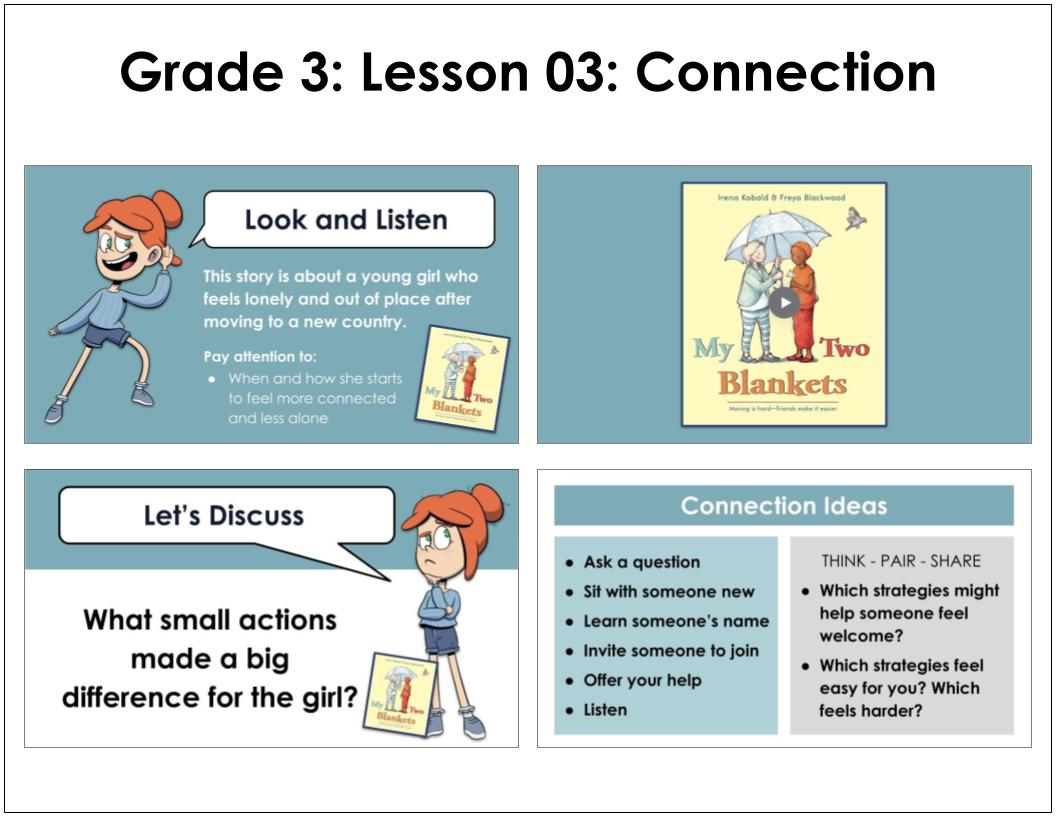
- Meaningful Engagement: Every book is paired with intentional discussion questions, reflection prompts, or interactive activities that help students connect the story to their own lives and apply what they learn.
For example, in the Grade 3 lesson on connection, students explore My Two Blankets by Irena Kobald and Freya Blackwood. Before reading, students are invited to listen for specific themes. Following the story, guided discussions and application activities help students connect the characters’ experiences to their own understanding of connection and belonging.
Our goal is to move beyond simply reading a story to creating meaningful opportunities for reflection, connection, and real-world application.
- Skilled Facilitation: In Focus lessons include Teacher Tips that guide educators in creating supportive learning environments, encouraging respectful discussions, honoring diverse perspectives, and allowing students to share personal experiences voluntarily.
- Consistent Integration: Literature is intentionally incorporated throughout In Focus lessons to reinforce well-being competencies, strengthen classroom connections, and provide ongoing opportunities for reflection and application.
- Educator Support: In Focus provides structured discussion prompts, instructional guidance, and practical strategies to help educators confidently facilitate meaningful conversations while recognizing when students may need additional support.
Research suggests that children’s literature can be a valuable tool for supporting social-emotional development and student well-being, particularly when stories are developmentally appropriate, relevant, and paired with intentional discussion and reflection.
At In Focus, literature is more than a read-aloud. It is an intentional instructional tool that helps students connect what they read to how they think, feel, interact, and respond to the world around them.
By integrating literature into our comprehensive, skills-based approach to student well-being, we help educators turn meaningful stories into opportunities for lasting learning and personal growth.
References:
- Abdul Aziz, R., Wan Mohd Saman, W. S., Shaifuddin, N., & Mohd Radzi, S. (2025). Bibliotherapy Features in Children’s Literature: A Systematic Literature Review. Journal of Information and Knowledge Management.
- Redman H, Melendez-Torres GJ, Bethel A, Green J. (2024). The impact of school-based creative bibliotherapy interventions on child and adolescent mental health: a systematic review and realist synthesis protocol. National Library of Medicine.
- Redman, H., Mutanda, D., Bethel, A., Miller, R., Melendez-Torres, G. J., & Green, J. (2025). Does Creative Bibliotherapy delivered in schools improve mental health-related outcomes for 5–16 year olds? A systematic review. Arts & Health.
- Serafini, A. (2024). Bibliotherapy in Education: A Systematic Review. Alabama Journal of Educational Leadership.